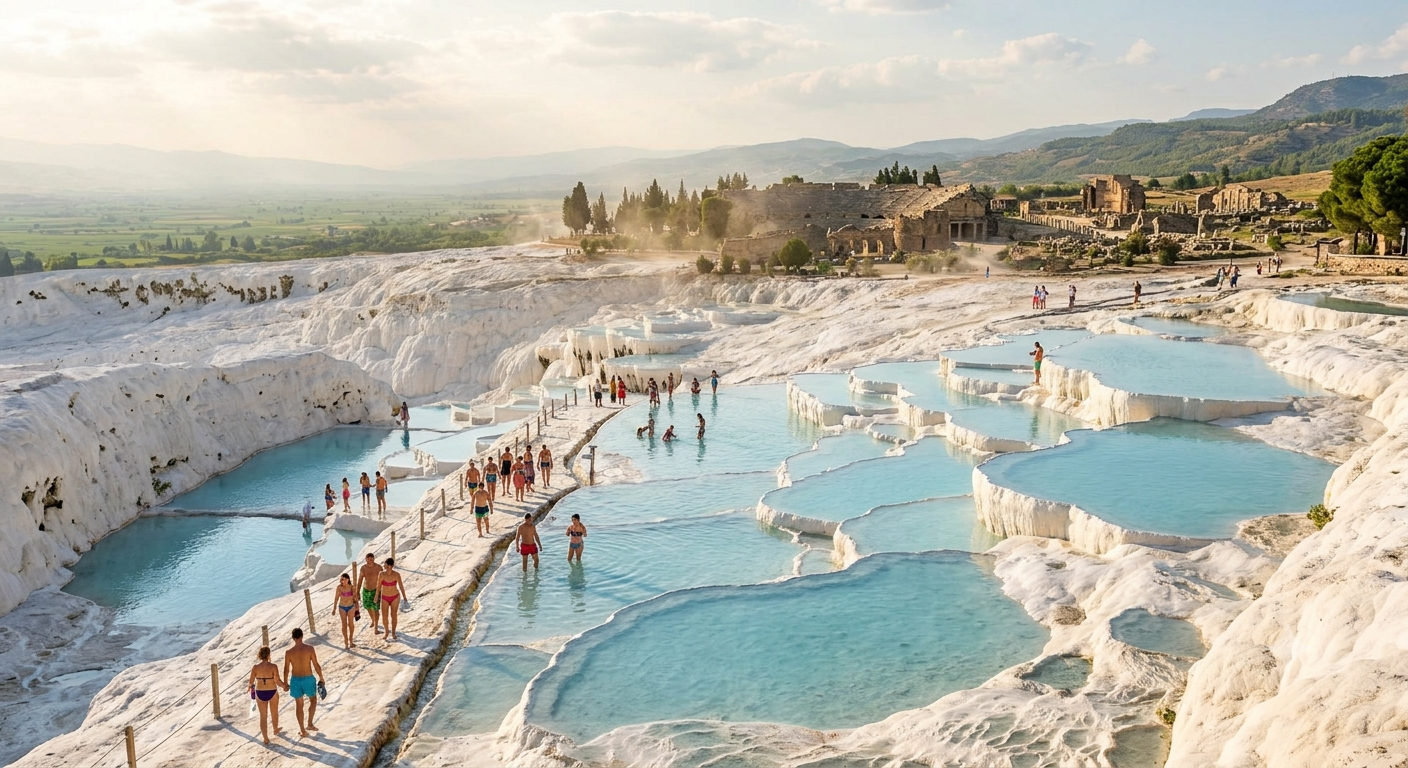
Timing your visit to Pamukkale can make the difference between walking comfortably along glowing white travertine terraces and struggling through blinding glare, intense midday heat, and shoulder-to-shoulder tour groups. Located in southwestern Turkey's Denizli Province, Pamukkale's mineral-rich thermal pools and the ancient ruins of Hierapolis draw millions of visitors each year.
To experience the travertine pools at their best, you must consider seasonal weather shifts, daily crowd arrivals, and changing natural light. Whether your priority is taking perfect photos, avoiding large tour groups, or swimming in warm thermal waters, choosing the right month and time of day is essential.
Quick Travel Snapshot: When to Go
- Best Seasons: Spring (April to May) and Autumn (September to October) for ideal weather and manageable crowds.
- Best Time of Day: Early morning (6:30 AM – 9:00 AM) or late afternoon until sunset.
- Peak Season: July and August (hot and very crowded).
- Off-Season: November to March (cold, quiet, and budget-friendly).
What Is the Best Time to Visit Pamukkale?
The absolute best time to visit Pamukkale is during the shoulder seasons of spring (April–May) and autumn (September–October). Daytime temperatures during these months typically range from 18°C to 28°C (64°F to 82°F), creating comfortable conditions for exploring the open-air site on foot.
During these shoulder months, the glare from the white calcite rock is less intense than in summer, and the natural water temperatures feel pleasant against the ambient air. You will also avoid the heavy summer crowds that arrive on daily tour buses from coastal resorts.
Pamukkale Weather by Season
Pamukkale experiences four distinct seasons, each offering a completely different travel experience. Here is what to expect throughout the year:
| Season | Average Temp | Crowd Levels | Best For |
|---|---|---|---|
| Spring (Apr–May) | 18°C – 27°C (64°F – 80°F) | Moderate | Walking the ruins, spring blooms, mild weather |
| Summer (Jun–Aug) | 30°C – 38°C (86°F – 100°F) | Very High | Long daylight hours, hot-air ballooning |
| Autumn (Sep–Oct) | 22°C – 30°C (72°F – 86°F) | Moderate | Golden hour photography, comfortable sightseeing |
| Winter (Nov–Mar) | 8°C – 16°C (46°F – 60°F) | Low | Solitude, steaming pools, budget travel |
Pamukkale in Spring (April – May)
Spring is one of the most pleasant periods to visit Pamukkale. Mild temperatures allow you to walk barefoot up the white travertine paths without burning your feet or shivering from cold winds. Green grass and colorful wildflowers blanket the ancient ruins of Hierapolis, making the landscape vibrant for landscape photography.
Pamukkale in Summer (June – August)
Summer brings hot, dry weather with temperatures often climbing above 35°C (95°F). The white calcite terraces reflect heat and sunlight, creating intense glare and hot ground conditions during midday. Midday visits can be challenging, but early morning and sunset visits offer clear blue skies, vibrant pool waters, and hot-air balloon sightings.
Pamukkale in Autumn (September – October)
Autumn is widely considered the best month-for-month period for clear conditions and comfortable travel. As summer tour groups fade, the park becomes quieter. The lower angle of the autumn sun produces warm golden light that highlights the unique limestone formations without the scorching summer heat.
Pamukkale in Winter (November – March)
Winter brings cold air, occasional rain, and rare snowfall. Daytime temperatures usually hover around 8°C to 12°C (46°F to 54°F). While walking barefoot on the cold stone travertines can feel chilly, the warm thermal water continuously flowing over the rocks creates a mist. Winter offers low prices, peaceful surroundings, and practically empty ruins.
When Is Pamukkale Most Crowded?
Understanding tourist patterns helps you avoid heavy crowd congestion:
- Peak Daily Hours (10:00 AM – 4:00 PM): Large day-tour buses from Antalya, Bodrum, Marmaris, and Izmir arrive during late morning. Main paths and pools become packed.
- Quiet Daily Hours (6:30 AM – 9:00 AM & 5:00 PM – Sunset): Overnight stayers in Pamukkale town enjoy peaceful access before day-trippers arrive and after they leave.
- Seasonal Peaks: July and August see the highest visitor volume. Weekends are also noticeably busier due to domestic weekend travel.
Best Time for Pamukkale Photography
Pamukkale's white rock faces and turquoise water reflect light dramatically. To take high-quality photos, plan around natural lighting conditions:
Sunrise Photography
At early dawn, hot-air balloons launch over the travertine terraces and the ancient city of Hierapolis. Early light produces soft tones, eliminates harsh shadows, and casts blue and pink pastel hues across the water-filled pools. Sunrise is also the best time to capture photos without crowds in your frame.
Sunset Photography
Sunset is the most famous window for photography at Pamukkale. As the sun drops toward the horizon, the white travertine terraces absorb orange, red, and deep purple reflections. Position yourself along the upper travertine boardwalk for wide landscape shots looking west across the valley.
Quick Photography Tips
- Bring a Circular Polarizer Filter: Helps control intense white glare and enhances the vivid blue of thermal pools.
- Watch Exposure Settings: The brilliant white calcite can trick camera meters into underexposing photos. Adjust exposure compensation slightly positive (+0.7 to +1.0).
- Use Wide-Angle Lenses: Perfect for capturing the wide expanse of travertine steps and ancient Roman amphitheaters.
What to Wear and Bring to Pamukkale
Visiting Pamukkale requires proper preparation because of site regulations and weather conditions:
- Bare Feet Only on Travertines: Footwear is strictly prohibited on the white travertines to protect the soft calcite rock. You must remove shoes and carry them in a bag.
- Sturdy Walking Shoes: Essential for exploring the uneven stone walkways of Hierapolis, the ancient theater, and the historical museum.
- Swimwear and Towel: Required if you plan to wade in travertine pools or swim among submerged Roman columns at Cleopatra's Antique Pool.
- Sun Protection: Sunglasses, wide-brimmed hats, and high-SPF sunscreen are necessary year-round to protect against UV reflection.
How Long Do You Need in Pamukkale?
Plan to spend between 4 to 6 hours to visit both Pamukkale and Hierapolis without rushing. A typical itinerary looks like this:
- 2 Hours: Walking barefoot along travertine paths and enjoying thermal pools.
- 1 to 2 Hours: Exploring Hierapolis, including the grand Roman Theatre and the Necropolis.
- 1 Hour: Swimming in Cleopatra's Antique Pool and visiting the site museum.
Staying overnight in Pamukkale town lets you experience sunset and sunrise without long road journeys on the same day.
Turkey Entry Requirements and Visa Information
International visitors planning a trip to Pamukkale must ensure they meet current Turkish entry rules. Passport holders from many countries are required to hold a valid visa or entry permit before entering the country.
Depending on your nationality, you may be eligible to request your travel authorization online. You can check the Turkey eVisa eligible countries list to verify whether your passport qualifies for online visa issuance.
If eligible, submit your details using the official Turkey eVisa application portal. Standard processing takes 2–3 days. If you have urgent travel plans, Super Rush processing offers an expected turnaround of up to 24 hours, subject to clear information and government processing times. You can track your processing progress anytime via the Turkey eVisa status portal.
Notice: Our agency provides application assistance services. We are not affiliated with the Turkish government, and official entry decisions rest with border authorities.
Leave a Comment
Share your questions, feedback, or experience regarding the news.
No Comments Yet
Be the first to share your experience or ask a question.