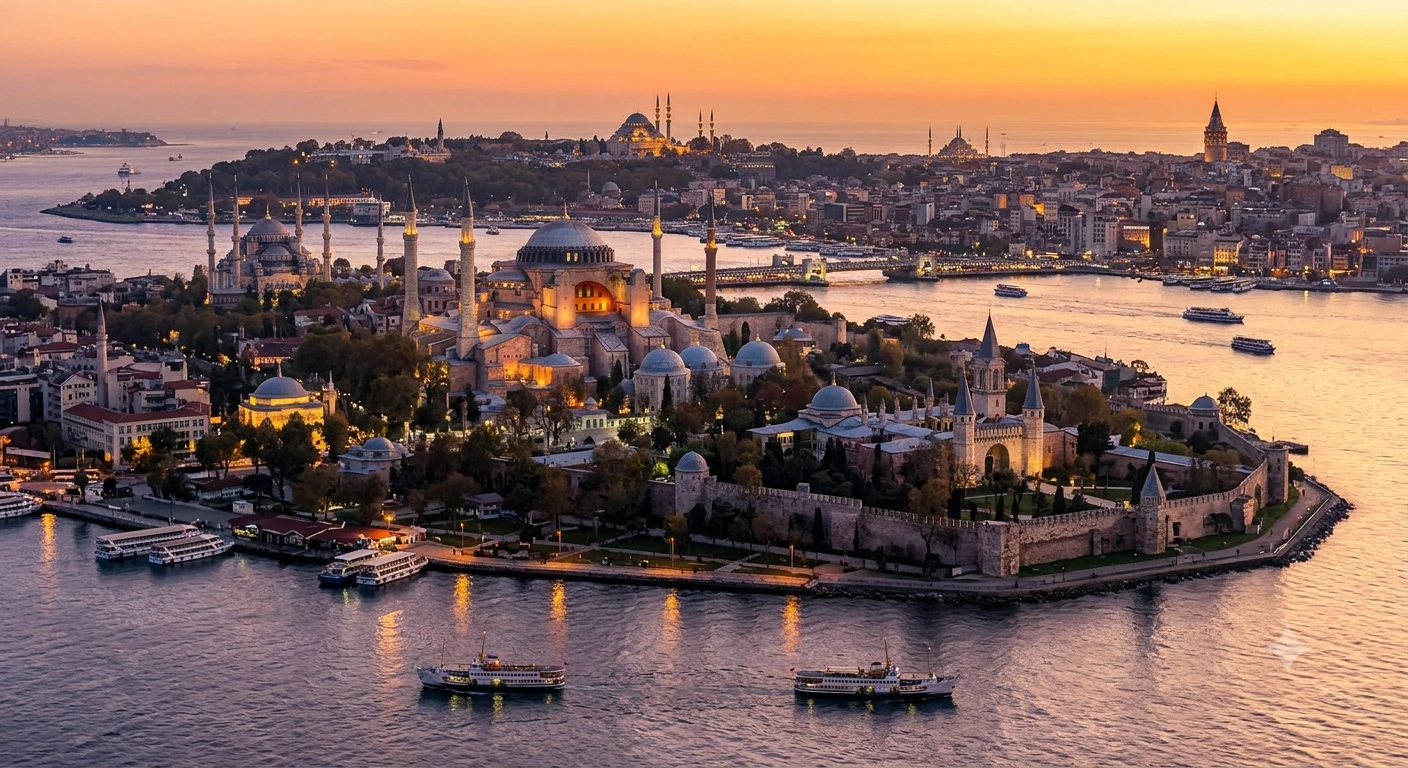
Istanbul is Turkey's largest city and a major cultural and historical destination located on both sides of the Bosphorus. Visitors can explore historic landmarks, markets, palaces, waterfront areas, local food, and modern neighborhoods seamlessly across two continents.
Why Visit Istanbul?
Istanbul stands as one of the world's most compelling urban destinations, captivating travelers with its seamless blending of European and Asian influences. As a focal point for global trade, diplomacy, and culture for thousands of years, the city offers an unparalleled depth of history alongside a soaring contemporary lifestyle.
Whether you are drawn by majestic imperial architecture, atmospheric historic bazaars, or a thriving culinary scene, visiting Istanbul provides an incredible journey through time and culture. It is a city where morning calls to prayer echo across historic minarets while contemporary art galleries and trendy waterfront cafés hum with energy just steps away.
Where Is Istanbul Located?
Uniquely positioned across the Bosphorus Strait, Istanbul occupies geography on both the European and Asian continents. This strategic waterway connects the Black Sea directly to the Sea of Marmara, giving the city its distinctive maritime personality and commercial significance.
The western half of the city lies in Europe, housing many of the most famous historical monuments and primary tourist corridors. The eastern half extends into Asia, offering bustling residential communities, rich food quarters, and a slightly more relaxed local atmosphere.
A Brief History of Istanbul
First established in antiquity as Byzantium, the settlement grew into an empire's heart when Constantine the Great dedicated it as Constantinople in AD 330, making it the capital of the Roman Empire. It flourished for over a millennium as the brilliant epicenter of the Byzantine world.
Following the Ottoman conquest led by Sultan Mehmed II in 1453, Constantinople was transformed into the grand capital of the Ottoman Empire. Over centuries, mosques, grand bazaars, and lavish palaces reshaped its skyline. Today, these complex historical layers remain clearly visible across the city's diverse architecture, ancient walls, and historic quarters.
Top Places to Visit in Istanbul
The city contains a remarkably dense concentration of world-famous monuments and cultural landmarks. Here are the principal Istanbul attractions every traveler should consider adding to their itinerary:
Hagia Sophia
Originally constructed in the 6th century as a massive Christian cathedral under the Byzantine Empire, Hagia Sophia was later converted into a revered imperial mosque during the Ottoman era. After serving as a world-renowned public museum for much of the modern 20th and 21st centuries, it currently functions as an active mosque welcoming both worshippers and global visitors.
Good for: Architecture & History LoversBlue Mosque
Officially known as the Sultan Ahmed Mosque, this iconic landmark faces Hagia Sophia across a manicured park. Built in the early 17th century, it is famed for its six slender minarets, cascading domes, and thousands of hand-painted blue İznik tiles decorating its soaring interior.
Good for: Photographers & Culture SeekersTopkapi Palace
Serving as the primary residence and administrative seat of Ottoman sultans for nearly four centuries, this grand complex features peaceful courtyards, imperial treasury rooms, historical relic displays, and dramatic views looking out over the Bosphorus.
Good for: Royal History EnthusiastsGrand Bazaar
One of the largest and oldest covered markets in the world, the Grand Bazaar spans dozens of covered streets lined with thousands of shops. Visitors can browse carpets, hand-painted ceramics, leather goods, jewelry, spices, and traditional handicrafts.
Good for: Shoppers & ExplorersThe Bosphorus Strait
Cruising the Bosphorus provides an essential perspective on Istanbul sightseeing. A ferry or boat tour glides past Ottoman waterfront mansions (yalı), historic fortresses, marble palaces, and modern suspension bridges connecting two continents.
Good for: Scenic SightseeingGalata Tower
Standing prominently above the historic Galata district, this medieval stone watchtower offers panoramic 360-degree views across the Golden Horn, the Bosphorus, and the historic peninsula's minaret-filled skyline.
Good for: Panoramic City ViewsBasilica Cistern
An ancient subterranean water reservoir built during the 6th century under Byzantine rule. Known as the "Sunken Palace," it features hundreds of marble columns illuminated by soft lighting, classical music, and carved Medusa head bases.
Good for: Atmospheric ExplorationDolmabahçe Palace
Located directly on the Bosphorus shoreline, this 19th-century palace showcases extravagant European-influenced architecture mixed with traditional Ottoman design, complete with massive crystal chandeliers and opulent gold leaf ceilings.
Good for: Art & Luxury AdmirersIstanbul's Neighborhoods
Every neighborhood in Istanbul possesses its own distinct personality, architecture, and lifestyle. Exploring various districts allows you to experience the full spectrum of local life.
Sultanahmet
The historic heart where iconic landmarks like Hagia Sophia, the Blue Mosque, and Topkapi Palace are located within comfortable walking distance of each other.
Beyoğlu & Istiklal Street
A bustling modern European area known for lively pedestrian avenues, vintage trams, retail stores, historic arcades, and active nightlife.
Galata & Karaköy
Trendy waterfront districts packed with specialty coffee shops, art galleries, boutique stores, historic bakeries, and modern dining spots.
Kadıköy (Asian Side)
A vibrant, artsy district offering exceptional food markets, independent bookstores, seaside parks, and relaxed neighborhood cafés.
Beşiktaş
A energetic residential and university district featuring lively local markets, tea gardens, and scenic waterfront promenades along the Bosphorus.
What to Eat in Istanbul
Istanbul's culinary culture is a rich reflection of its geographic location and diverse heritage. Visitors can move easily between simple street food stalls, traditional neighborhood taverns, and high-end modern restaurants.
Turkish Breakfast
A lavish spread of cheeses, olives, fresh tomatoes, cucumber, honey, jams, eggs, and freshly baked breads.
Simit
A beloved street snack consisting of a sesame-crusted circular bread ring, best enjoyed fresh from street carts.
Kebabs & Meze
Flavorful grilled meats paired with diverse cold and warm appetizer dishes served family-style.
Baklava & Sweets
Layers of crisp phyllo pastry filled with chopped nuts and sweetened with fragrant syrup.
Tea & Turkish Coffee
Black tea served in tulip-shaped glasses, or rich, finely ground unfiltered Turkish coffee.
Bosphorus Seafood
Fresh seasonal fish served at traditional waterfront restaurants along the Bosphorus shores.
Best Things to Do in Istanbul
- Take a sunset ferry ride across the Bosphorus between Europe and Asia.
- Get lost in the aromatic aisles of the Spice Bazaar smelling fresh teas and spices.
- Experience a relaxing session at a historic Turkish bath (hammam).
- Attend a contemporary art exhibition or international music festival.
- Enjoy panoramic city views from a rooftop café overlooking the Golden Horn.
Getting Around Istanbul
Navigating Turkey's largest city is straightforward once you understand its public transport system. Istanbul features an extensive network of modern metro lines, trams, buses, and public ferries.
Public Transit: The Istanbulkart contactless transit card provides seamless access across almost all public transport options. The T1 tram line is particularly useful for tourists, connecting major sights in Sultanahmet with Karaköy and Kabataş.
Ferries: Public ferries are often the most scenic and efficient way to travel between the European and Asian shores, helping you bypass city road traffic altogether.
Taxis & Walking: Taxis are widely available throughout the city, though heavy traffic during peak hours can cause delays. Exploring historic districts like Sultanahmet and Galata on foot is recommended, but be prepared for steep hills and cobblestone streets.
When Is the Best Time to Visit Istanbul?
Istanbul is a year-round destination, with each season offering a unique travel experience:
Spring (April to May)
Mild weather, blooming tulip gardens, and pleasant conditions for comfortable walking tours.
Summer (June to August)
Warm temperatures, vibrant nightlife along the waterfront, and busier tourist sights.
Autumn (September to November)
Comfortable temperatures, manageable sight lines, and ideal conditions for sightseeing.
Winter (December to March)
Cooler weather, occasional rain or snow, fewer crowds, and cozy indoor café culture.
How Many Days Do You Need in Istanbul?
The length of your trip depends heavily on your interests and travel pace:
- 1 Day Stopover: Focus exclusively on key landmarks in the Sultanahmet area, such as Hagia Sophia and the Blue Mosque.
- 2–3 Days: Allows enough time to explore primary historic sites, browse the Grand Bazaar, ride a Bosphorus ferry, and visit Galata.
- 4–5 Days: Ideal for a thorough trip including Asian-side neighborhoods (Kadıköy), modern art spaces, palaces, and a relaxed culinary pace.
Summary Overview
| Topic | Quick Information |
|---|---|
| Destination | Istanbul, Turkey |
| Location | Straddling the Bosphorus in both Europe and Asia |
| Best For | History, culture, food, architecture, and shopping |
| Recommended Stay | 2–5 days depending on your itinerary |
| Main Historic Quarter | Sultanahmet |
| Popular Experiences | Bosphorus boat trips, historical bazaars, regional dining |
| Transport | Metro, tram, public ferry, bus, taxi, and walking |
Istanbul Travel Tips
- Plan visits to popular attractions early in the morning to minimize waiting times.
- Allow extra travel time during afternoon rush hours due to heavy city traffic.
- Utilize scenic public ferries to cross between continents efficiently.
- Wear sturdy, comfortable shoes for hilly streets and long walking tours.
- Keep personal belongings secure when moving through densely populated market areas.
- Check opening schedules and dress codes for active places of worship before visiting.
- Carry local currency (Turkish Lira) or cards for small street vendors and transport passes.
- Verify your official Turkey eVisa eligible countries status well in advance of departure.
- Keep digital and printed copies of essential travel documents accessible.
- Monitor your email inbox regularly if you have submitted a visa application.
Leave a Comment
Share your questions, feedback, or experience regarding the news.
No Comments Yet
Be the first to share your experience or ask a question.